

Redacción Alabrent
Low-impact focusSustainability remains a driving force in signage. The entire lifespan of a project – from concept, to development, to reality – is factored into how green it’s perceived. From raw materials and production methods through to installation, lifespan and end of life.
This shift reflects the wider masses – who use signage but are becoming more environmentally conscious – as well as regulatory pressures.
One example is the growing demand for greener signage materials and elements – such as: recyclable aluminium frameworks, PVC-free films, water-based inks and mono-material parts. Modular signage systems, which allow elements to be refreshed or replaced without discarding entire structures, are also becoming more commonplace.
Digital and physical signage continue to converse
Brands want signage that can be updated quickly, centrally and consistently across multiple locations. In light of this, signage is now less about format and more about how it functions within an integrated, connected environment.
We’re increasingly seeing static signage being paired with digital touchpoints – for example, QR codes – which seamlessly close the gap between physical spaces and online content.
Additionally, LED and display technologies are becoming slimmer, more energy efficient and easier to integrate into architectural settings.
Smarter signage for complex enviroments
With building infrastructure and public spaces becoming more technologically advanced and dynamic, signage is expected to respond accordingly. It not only improves the user experience, but also provides clarity and inclusion. A good example of this is wayfinding systems, which are designed to adapt to changing conditions like the time of day, visitor flow or users’ accessibility requirements.
Smart, responsive signage is also commonplace in transport hubs, healthcare facilities, retail and leisure spaces.
This development in signage requires an understanding, from signage makers, of how people move through spaces and the signs within them. It also reinforces the ongoing need for, and value of, specialists who design signage that operates well in complex, real-life settings.
A renewed focus on crafft and materials
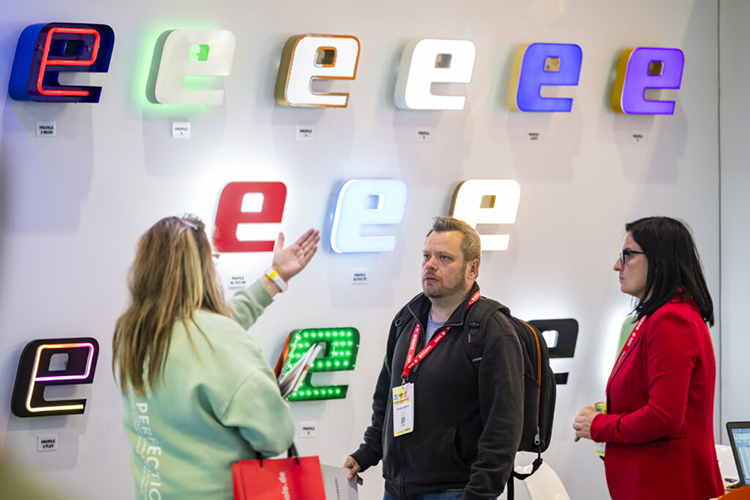
To stay competitive, brands are investing in physical quality to differentiate their signage and create more meaningful user experiences. This includes: textured finishes, dimensional lettering, layered materials and integrated lighting.
In addition, techniques such as routed wood, metal fabrication and bespoke acrylic are being combined with digital print to create signage that feels premium and purposeful. This trend is particularly noticeable in high-end retail and hospitality, where signage contributes to storytelling and atmosphere, rather than just simply providing information.
The power of personalisation
Brand signage is often tailored to specific locations, audiences or local contexts while maintaining a strong sense of consistency. For example, signage for a franchised restaurant chain.
Meanwhile, advancements in print technology and workflow automation continue to make personalisation more achievable at scale, improving the potential return on investment.
This creates opportunities for sign makers to deliver high-value, personalised products and services which customers and end-users are willing to pay a premium for.
European Sign Expo 2026: The place for experts
European Sign Expo 2026 is set to bring ideas to life. It will unite technical experts, creatives and business leaders who are shaping the future of signage, and enable them to stay updated on market trends and technologies by facilitating collaboration and knowledge sharing.
For more information on European Sign Expo 2026 (plus its co-located events) and to register to attend, visit: www.europeansignexpo.com . Registration for all six events opens in January 2026 and visitors can purchase super early bird tickets for €30, using code FESM602.